A Novel by P.N. Kross
A story about dogs, displacement, and the quiet small moments that stitch a life together. Set between Seattle's grey mornings and California's borrowed light.
They told us there were better lives out there.
Better food, better smells, better everything. They said there were other parts of the world beyond this box-shaped room I had come to call home. People out there, kind and warm and flush with cash, were apparently just waiting to adopt a small, lovable creature and spend their disposable income on gourmet meals and imported toys. All we had to do, they said, was look adorable when the visitors came.
I want to be clear about something right now: I was not adorable.
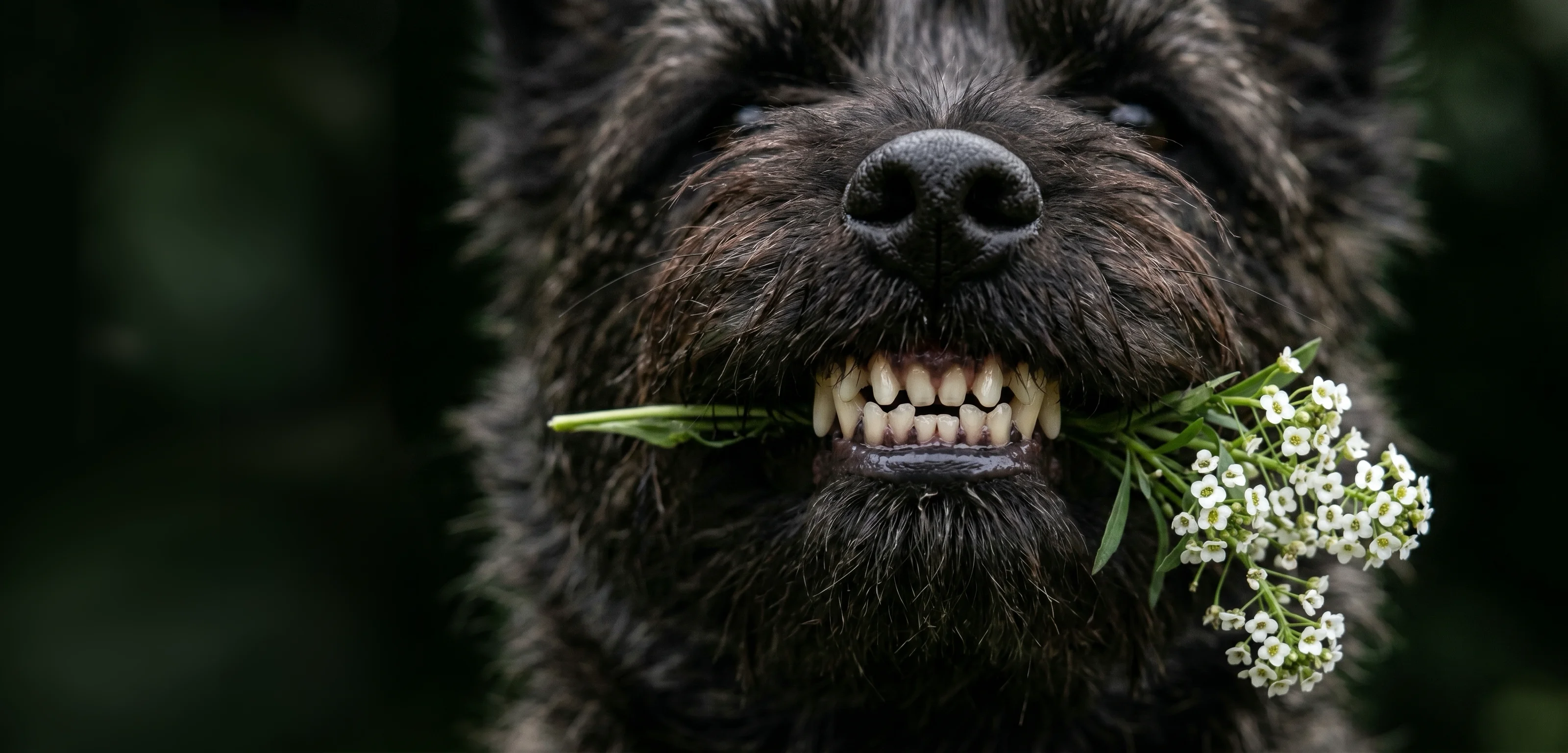
I was overweight, with teeth that pointed in at least four different directions and hair so coarse it could sweep floors. I had a head that looked slightly too large for my body, the kind of proportions you see on a cartoon villain or a novelty bobblehead. My brothers were not much better, though they would dispute this if asked. Together we were a mismatched set, the four of us, like a jigsaw puzzle where none of the pieces came from the same box. The blondes in the room were the pieces that fit. We were the ones that got kicked under the couch.
To have a home was a dream. To be wanted was deeper than that. I told myself every night that such dreams could come true. Most nights I believed it. Some nights I did not.
But before I tell you how all of that turned out, let me start somewhere closer to the beginning.
I was born on a small farm in Albany, Oregon, which is a city that sounds more exciting than it is. My mother was a beautiful woman, though I would not learn this until much later. She had dark eyes, black, brown, honey-gold hair with streaks of grey, and a patience that I clearly did not inherit. My three brothers and I came into the world at a difficult time, which, looking back, probably did not help our mother's already complicated situation.
Our father was not present for any of this. He had made his exit before I arrived, which tells you everything you need to know about his commitment to parenthood. My oldest brother claimed to have a memory of him. I was skeptical. We were very young. I think he invented the memory because he needed it, the way you invent reasons for things that have no good ones.
Two days after Christmas, a woman came to the farm with an old car and a plan that did not include explaining itself to us. She was not unkind. She moved carefully, spoke quietly, and loaded all four of us into the back of her vehicle with the practiced efficiency of someone who had done this before and found it no easier with repetition.
We pressed our faces to the rear window as the farm shrank behind us. The fields went grey and then disappeared entirely as the car turned onto the main road. Our mother did not come to the window to watch us go. I do not know if she stayed inside because it was too cold or because it was too painful. I have spent a considerable amount of time imagining both scenarios and I still have not decided which one I prefer.
I understood sadness. I think most creatures understand sadness before they understand almost anything else. It does not require experience or vocabulary. It simply arrives, and you know it for what it is.
The drive from Albany to Seattle took several hours, and I want to tell you about it properly because it matters. Not for what happened during it, which was very little. But for what we saw through the windows, which was everything we were leaving behind and everything we were not yet allowed to have.
Albany in the days after Christmas is a specific kind of beautiful. The farms along the highway sit low and wide under a sky that cannot decide between grey and blue and settles on both simultaneously. The fields had a thin cover of frost that caught what remained of the afternoon light and held it, so that the ground seemed to glow from underneath, as if the earth itself was warm and the cold was only on the surface. We had lived our entire short lives on a farm exactly like these, and I did not understand until I was watching them pass behind us through glass that I had never properly looked at one before. You do not look at the place you live. You simply live in it. It is only when it starts moving away from you that it becomes something worth seeing.
The old car moved north on the highway and the farms gave way to small towns and the small towns gave way to larger ones and everywhere we looked the world was arranged for the holiday in ways that seemed, from the back of that car, almost unbearably kind. Strings of LED lights wrapped around porch railings and wound through the branches of front yard trees, their colors reflected in the wet pavement below so that every lit street seemed to have a mirror version of itself running underneath it. Plastic reindeer stood frozen mid-prance on lawns, caught in the permanent moment of leaping, going somewhere. Nativity scenes appeared at regular intervals, miniature and serious, baby Jesus in his manger surrounded by the usual cast, and I noted that even baby Jesus had a family around him, which seemed like a reasonable minimum.
The houses were the hardest part.
Through the lit windows of those houses we could see the outlines of families doing the ordinary things that families do in the days between Christmas and New Year, which is to say nothing of any particular consequence but doing it together. A figure moving through a kitchen. Two smaller figures chasing each other through a living room. A group arranged on a couch around the blue flicker of a television, their faces turned toward the same light. None of it was dramatic. None of it was spectacular. It was simply the unremarkable texture of a life being lived among others who belonged to you, and from the back of that old car it looked like the most extraordinary thing in the world.
My youngest brother had pressed himself against my side and was watching the houses with an expression I recognized as the specific grief of wanting something you cannot name. He was too young to name it. So was I. But we both knew it when we saw it through those windows, that warm arranged life, those belonging people, that particular light.
My oldest brother watched the road ahead with the focused expression he used when he was storing something for later. He was already, at that age, the kind of creature who converted pain into fuel. I watched him watching and thought: he will use this. He will carry what this looks like and he will use it to get us somewhere better. I believed this completely.
My sleepy-looking brother, the second oldest of us, fell asleep across my feet somewhere south of Portland, which was uncomfortable but also one of the warmest things I can remember from that trip. He slept the way he always slept, completely and without apparent concern for the circumstances, his breathing slow and even against the sound of the highway. I did not move my feet. I let him sleep.
The sky darkened early. The road was slick. The lit houses became more frequent as we moved into the suburbs north of Portland, and then into the outer edges of the greater Seattle area, where the houses grew closer together and the lights multiplied until it seemed like every surface that could hold a light was holding one, the whole dark landscape strung and decorated against the night.
It was beautiful. I want to be clear about this. It was genuinely, uncomplicatedly beautiful, and I pressed my face to the cold glass and looked at it and felt two things at once: the beauty of it and the knowledge that none of it was for us. Both things were true. Both things hurt in different ways.
Then the car turned off the main road, and the lights thinned, and the streets became narrower and less decorated, and the houses became older and closer together, and we drove for several more minutes through a part of the city that had not participated in the holiday with any particular enthusiasm, and we stopped.
We arrived at Aurora Home sometime after dark.
Let me describe Aurora Home for you so that you have the proper picture in your mind. I want the contrast to be clear, between what we had just driven through and what we were now looking at, because the contrast is the point.
Imagine the least inviting building you have ever seen. Now imagine it has given up. Now imagine it has been given up for some time and has made its peace with this. That is Aurora Home.
The building sat at the end of a short cracked driveway, set back from the street behind a chain-link fence that had been repaired in several places with wire that did not quite match the original and gave the whole fence the appearance of something that had been through difficulties. A single light above the front door cast a yellow circle on the entrance, not warm, not welcoming, the functional light of a place that wanted to be visible without wanting to be visited. Two scraggly bushes flanked the front steps, still alive but barely, their branches thin and reaching in directions that suggested they had given up on any particular shape and were simply extending themselves into whatever space was available.
The front of the building was a faded beige that had probably once been white but had lost its conviction somewhere along the way, the color of something that had been exposed to too many winters without maintenance or encouragement. The gutters sagged along the roofline, pulling away from the fascia in two places, dark water stains running down the wall beneath them like old arguments. One of the windows on the upper floor had a crack running diagonally across it, a clean diagonal line that someone had covered with duct tape years ago and never revisited. The duct tape had yellowed and begun to peel at one corner, which gave the window the look of something winking at you against its will.
A small wooden sign beside the door said AURORA HOME in letters that had been painted over at least twice, the layers of paint giving the words a slightly swollen look, as if they had been eating steadily and were beginning to show it. Below the sign, someone had at some point attempted to hang a wreath for the holiday season. The wreath was still there. It was brown.
We looked at this building from the back of the car and said nothing.
There was, genuinely, nothing to say.
The woman who had driven us opened the back door and we climbed out into the cold night air, and I turned once to look at the street behind us, at the ordinary street with its ordinary houses, some of them still lit from within, and I thought about the houses we had passed on the highway and the figures moving through their kitchens and the families arranged on their couches and the particular warm light of all of it, and then I turned back to Aurora Home and I thought: this is where we are.
Not there. Here.
Inside was not better.
The smell hit us before the door was fully open, which was impressive as an achievement if not as an experience. Mildew, primarily, a deep and well-established mildew that had claimed the building thoroughly and was not interested in compromise. Underneath the mildew was something...